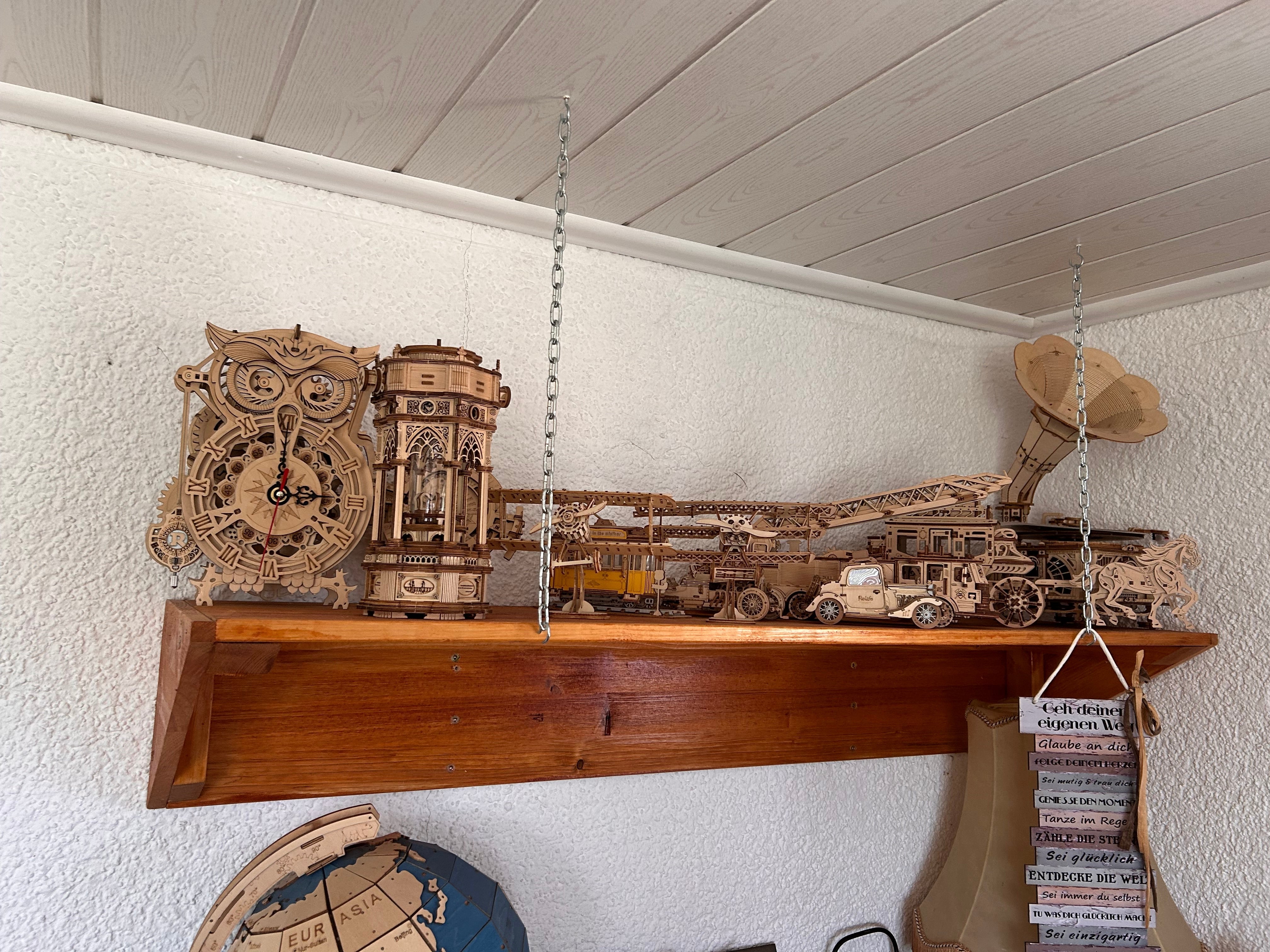




Puzzles are very popular and are a great hobby for relaxing. Puzzles also offer a number of other benefits—they can train both creativity and analytical thinking. Once you have finished your puzzle, the question arises as to what to do with it next.
Take it apart again and put it back in the box? That's rather frustrating, of course, so many people decide to frame their finished work in a puzzle frame instead and hang the puzzle on the wall.
- Your work will look great in a puzzle frame.
- With a few tricks and puzzle tips, you can frame the puzzle without any mishaps!
- With a puzzle in a picture frame, you have a decorative element for your home that you have created yourself.
- A little preparation is required to ensure that the puzzle frame is framed successfully.
What do I need to frame a puzzle?
To ensure that everything goes smoothly when framing your puzzle and that the puzzle does not fall apart again, you will need a few tools. However, most people usually have these at home, so you don't need to buy anything extra apart from the right frame.
What do you need to frame your puzzle?
- A sturdy frame made of glass or plastic that fits the size of your puzzle.
- A pair of scissors.
- A roll of wide adhesive tape, either double-sided or single-sided. Alternatively, you can use a conservator. Craft glue or adhesive film can also be used.
- A sturdy piece of cardboard the size of your puzzle.
- A piece of sturdy paper the same size as your puzzle.
You should also get help from another person, because turning the puzzle over works best with two people.
How do I frame a puzzle?
The framing of a puzzle takes place in several steps. Once the appropriate frame has been selected, the puzzle must first be turned over. To hold the pieces together, the puzzle is now glued, and then the finished glued picture can be framed.
To use it as a decorative element, it's best to hang it on the wall right away!

1. Complete the puzzle

The most important thing, of course, isto finishthepuzzle before framing it. A picture that is only half assembled cannot be framed and does not look very nice either. Take your time whendoing the puzzle. and take your time until everything is finished. You can alsotake a lookat ourpuzzle tips.
After all,the pointofdoing puzzles isto enjoy ahobby,not to get to the point of framing the puzzle as quickly as possible.
2. Select the appropriate frame

There are two fundamentally different types of puzzle frames. One type is made of plastic, the other of real glass. Plastic has the advantage of being durable and not breaking when dropped.
However, plastic is usually less stable and can warp. This can cause unsightly reflections on your puzzle. If you decide to go with plastic, you should also make sure that it is sunlight-resistant and does not become cloudy when exposed to light.
There are special frames available for framing puzzles, which ensure that the puzzle does not fall apart.
These frames have a rim, which is displayed asthe "insertion depth"when you select the frame. This insertion depth indicates how thick the puzzle can be for the frame. For example, thick puzzles, such as wooden puzzles, require a greater insertion depth than puzzles made of thin cardboard.
The disadvantage of these frames is that they are not available in all sizes and variants. Of course, you can also have puzzle frames made to order, but this may be a little more expensive. Instead, you can also use a normal picture frame.
Framing a picture requires more skill and care with a normal picture frame, but picture frames are available everywhere in all possible variations and sizes.
Of course, it is important that your puzzle fits into the frame. Since the manufacturer's sizes are not always 100% accurate, you should measure your finished puzzle before buying the frame.
Expert tip: If the puzzle is smaller than the frame, you can also use a mat. This creates an attractive frame around your puzzle and is both a decorative element and a useful aid if the frame you bought is not quite the right size.
3. Turn the puzzle over

Now comes the most difficult part of framing the puzzle: the puzzle must be turned over so that it can be glued, at least if you decide to use wide adhesive tape.
What is the best way to flip the puzzle?
To turn the puzzle over, slide a sturdy piece of paper under the puzzle that covers the entire size of the puzzle. Once you have done this, place a piece of cardboard on top of the puzzle so that it is now sandwiched between the sturdy paper and the cardboard. Now you and your helper press the two pieces of cardboard together at the corners. Together, you flip the puzzle over as quickly as possible and put it down again. Now the sturdy paper can be removed and the back of the puzzle is facing up.
4. Glue the puzzle together

There are several ways to glue your puzzle together. One option is to tape the puzzle together strip by strip on the back. Alternatively, you can use craft glue or adhesive film.
The easiest way is to use a ready-made wall mounting kitto stick the puzzle in place. The adhesive labels included in the kit are much easier to use than normal adhesive tape.
If you want to save yourself the trouble of turning it over, you can use a special preservative. This is transparent and is applied to the front of the puzzle.
When applying, make sure that the preservative runs into the gaps between the puzzle pieces so that they stick together.

The puzzle is not so firmly attached that you can lift it up by one corner, but with a little skill, you can frame even a puzzle that has been glued with Conserver.
The conservator also provides protection from sunlight and ensures that the colors of the puzzle do not fade, but you should be able to work with it very carefully so that the front of the puzzle remains attractive.
5. Frame the puzzle

Now it's time to actually frame the puzzle.
- To do this, carefully place the puzzle in the center of the frame.
- If you want to use a mat, you will need cardboard that is the same thickness as your puzzle.
- Cut it so that it fills the empty part of the frame, making sure everything is even.
- Now you can place the mat on top.
- As a final step, place the glass or plastic sheet on top of the puzzle and secure it according to the manufacturer's instructions.
Can you frame a puzzle without gluing it?
Of course, you can try to frame the puzzle without glue, but whether this attempt will be successful is rather uncertain. Puzzles fall apart so easily that it is almost impossible to get a puzzle into a frame without glue.
However, you can try to assemble the puzzle directly in the frame. This way, you can frame your puzzle without using glue.
How to make your own puzzle frame: Here's how
You can also make your own puzzle frame. To do this, you will need some sturdy cardboard, to which you glue a "frame" made of sturdy cardboard around the edge. This should be the same thickness as the puzzle so that it fits into the homemade frame at the end.
Now you need either adhesive film or an acrylic glass plate, which you can saw or cut to the right size. This is placed over the puzzle and fixed in place with transparent glue. Your homemade frame for your puzzle is now complete!
Conclusion
Framing a puzzle isn't that difficult if you approach it with a little patience and sensitivity. It's important not to rush and to carry out each step carefully. If possible, you shouldn't skip gluing the puzzle, unless you've assembled the puzzle directly in the frame.