




Motor development in children is showing a worrying trend—at least according to a long-term study presented by the RKI in 2017 asthe "MoMo Study."According to the World Health Organization's recommendations, children should exercise for 60 minutes a day. Anyone who watches a toddler playing could quickly come to the conclusion that 60 minutes is easily achievable.
However, the study paints a different picture: only 15% of children appear to achieve this level of exercise. Since a lack of exercise in childrencan lead to health problems, this is a worrying trend. Fortunately, with a little encouragement, this can be counteracted!
- Targeted support can help children's motor development.
- Children find it easy to develop motor skills, provided they are given the opportunity to do so!
- Targeted training can be used to promote basic motor skills in a playful and enjoyable way.
- Physical and motor development is very important for the health of our children.
What is meant by motor development?
Motor development is influenced by several factors that depend on the environment, our genetics, and our cognitive and biological development. A distinction is made between fine motor development and gross motor development.
Motor development is usually defined as the development of movement patterns in the human body. A distinction is made here between
gross motor skills of
- Head,
- Shoulder,
- Hull,
- basin,
- Arms and legs
and the fine motor skills areas of
- Fingering,
- Toes
- and facial muscles.
Motor skills are not just about developing muscles, but also about the interaction between the brain and the body. Motor skills training can therefore also help to improve children's ability to concentrate.
Motor development in children
A child's motor development does not depend solely on their environment, but also on their physical condition. This results in individual stages of motor learning.
Bone development can play a role and have an impact on the balance organ and coordination.
Strictly speaking , motor development probably begins in the womb. This is where the growing fetus has its first physical experiences. However, we only see this development after birth.
Anyone who observes their children will notice that many movements that we take for granted have to be learned by small children. For example, "clapping your hands" is very easy for us.
If we watch a toddler imitating this movement for the first time, we see that even this movement has to be learned. Only after several repetitions does the movement become natural. Other challenges in gross and fine motor skills come later in the course of motor development across the age groups:
- Running,
- Jumping
- and the challenge of tying a bow.
Many no longer learn this, but instead tie two loops together. This also works, but it promotes fine motor skills somewhat less than a real bow. The age of the child plays a role in the milestones that appear in motor development.
The motor development of babies in their first year of life
A note in advance:
Children's development can vary greatly. The following is therefore only a rough guideline. It is not a problem if a child takes a developmental step later than others.
Motor development in the first year of life is accompanied by a number of "milestones" that many parents eagerly await. These include, for example, rolling over onto the stomach, sitting up, and grasping objects. Here, too, a distinction is made between gross and fine motor development.
Since every child develops individually, some babies do not learn the following skills until they are 1.5 years old, but the first year is considered a guideline here.
Gross motor skills that are usually learned in the first 12 months:
- 2-5 months: The head is lifted while lying on the stomach.
- From 6 months: The baby begins to roll over independently—from their stomach to their back and later vice versa.
- From 9 months: The urge to move around takes hold, initially usually with the help of "crawling forward."
- Up to approx. 10 months: The baby learns to sit up on its own and begins to improve its forward movement. During this period, crawling usually replaces scooting.
- Up to approx. 12 months: The child pulls itself up to a standing position independently using furniture or other objects.
- From 12 months: The child begins to take its first steps.
Fine motor skills that are usually learned in the first 12 months:
When it comes to fine motor skills, the timing of learning can vary greatly. Children learn by imitation, so demonstrating the movements to them helps to encourage this development.
- From around 5 months: The child brings their hands together – they learn to clap. They also learn to grasp objects deliberately during this period.
- From around 6 months: Transferring an object from one hand to the other.
- From around 8-12 months: The child begins to develop fine motor skills and picks things up using only their thumb and index finger.
- From around 9-11 months: Fine motor skills develop into the "pincer grip," where objects are grasped using only the fingertips and thumb.
- At around 12 months: A pen can be grasped and held.
The motor development of toddlers and children
Motor development in children up to 3 years of age and in children between 3 and 6 years of age also includes several important age-appropriate stages, which are also assessed during routine check-ups with the pediatrician, for example. This enables doctors to quickly identify when a child needs specific support.
Gross motor skills that are usually learned in the first 6 years:
- From approx. 18 months: Walking down stairs using the heel-toe technique.
- From around 1.5-2 years: The toddler learns to hop.
- From around 18 months: Children learn to climb, which is usually not to their parents' delight. This is when new safety measures are usually needed in the home.
- At around 2 years of age: At this point, the child's gross motor skills for walking continue to develop and they begin to run.
- At around 2 years of age: At this point, gross and fine motor skills are combined when walking, and the child learns to walk on tiptoes.
- At around 3 years of age: Children now begin to walk up and down stairs using an alternating step.
- From age 3: The child begins to balance.
- Between 1.5 and 3 years: Depending on how early the child is encouraged to do so, they can learn to ride vehicles such as balance bikes or tricycles between the ages of 1.5 and 3. Caution is required in traffic here: children can ride very fast without being able to assess dangerous situations properly.
- Between 3 and 5 years: During this period, children learn to maintain the difficult balance of standing on one leg.
- From around 3 years of age: Now the child should learn to do a proper somersault. However, if this is not demonstrated or encouraged, children sometimes do not figure out how to perform this movement on their own.
- From around 5 years of age: Children can now switch from a balance bike or tricycle to a bicycle. From this age, children can also start swimming lessons and learn how to swim. They also learn how to do jumping jacks at this age.
Fine motor skills that are usually learned in the first 6 years:
- At around 1.5–2 years old: Children learn to use a knife and fork.
- At around 2 years of age: A pen can now be held in a five-point grip, allowing the child to begin writing.
- At around 3-5 years of age: During this period, drawing skills are developed. Children are now able to not only hold a pencil, but also draw various shapes on paper. They also learn how to apply pressure to the pencil during this period.
- From around 3 years old: Children can now usually dress themselves. However, they usually still need a little more help with buttoning up.
- Between 3 and 6 years: The age at which children acquire fine motor skills can vary greatly. During this period, however, these skills should be developed to the point where, for example, children can write fluently.
In conclusion, it must be said that the requirements for what our children should be able to do at a certain age have certainly changed.
The old book "Werkbuch für Mädchen" (Workbook for Girls) by Ruth Zechlin states that five-year-olds should only be allowed to do less difficult handicrafts, such as knitting.
Nowadays, no one would expect a five-year-old to be able to learn to knit at this age. We classify it as "too difficult for this age."
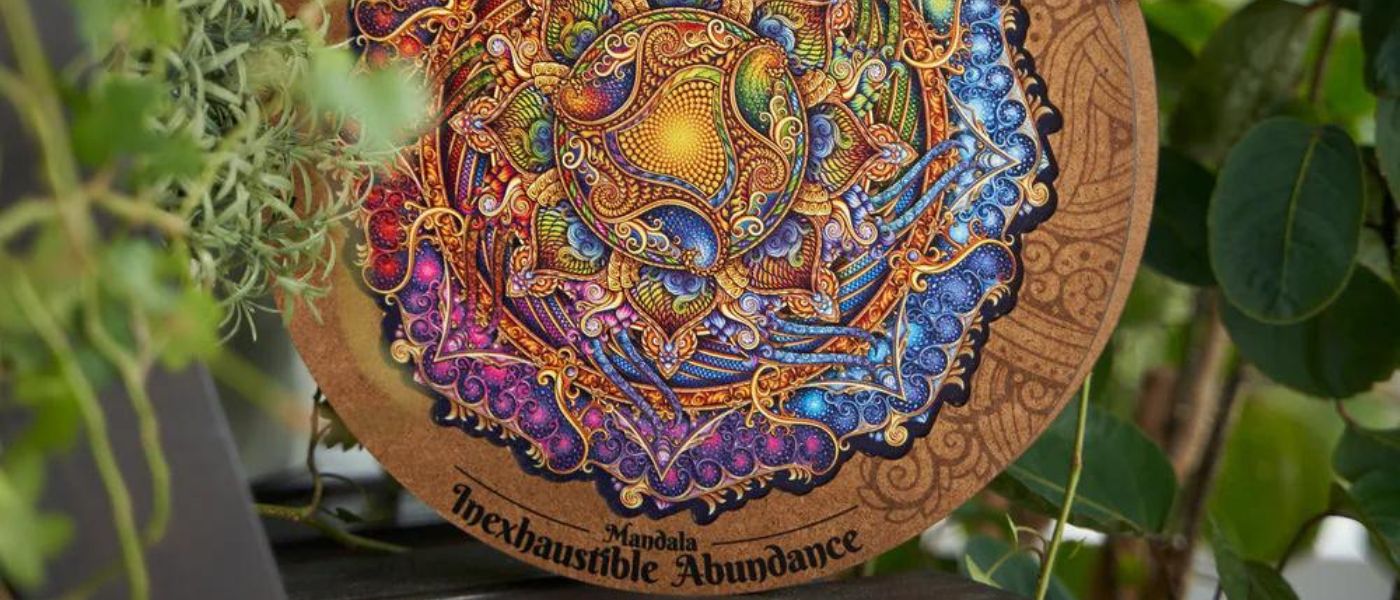
The situation is different with puzzles, however. These are available with large or small pieces. If your child enjoys them, you can MagicHolz one of our wooden puzzles from MagicHolz together.

What influences motor development?
Motor development is influenced by various factors, some of which we can influence, but some of which are beyond our control. For example, genetics plays a role that we cannot influence. Other factors, such as
- the place of residence,
- social contact,
- various sports
- Parents' attitudes toward sports activities can certainly be influenced.
Further reading on this topic includes, for example:
Krombholz, H. (1999). Physical, sensory, and motor development in the first and second years of life. In German Family Association (Ed.), Handbook of Parent Education. Volume 1: When partners become parents. pp. 533–557. Opladen: Leske + Budrich.
Krombholz, H. (2005). Promoting physical activity in kindergarten—A pilot study. Schorndorf: Hoffmann.
How can motor development in children be promoted?
The motor development of our children is therefore not completely beyond our influence. On the contrary—with the right support, a lot can be done to promote their development. Motor exercises for children can promote their motor skills at all stages.
Promote fine motor skills
Anything that can be touched and put together with fingers—or even toes!—is suitable for promoting fine motor skills. Building with blocks or Lego is a good exercise for fine motor skills.
Puzzles also promote fine motor skills, as does working with technical details such as gears or homemade pulleys. This also promotes an understanding of physics. Painting and drawing are also good ways to train children's fine motor skills.
Promote gross motor skills
Gross motor skills are best developed through movement games that can be played both outdoors and indoors. Climbing, jumping, running—all of these activities promote motor skills. As parents, we sometimes have to look the other way—not everything our children do seems safe to us, and there is of course a risk of injury with such activities.
If you want to be on the safe side, you can also opt for a sports club. There is always a supervisor present and the children are secured, for example on a climbing wall, unlike when climbing trees.
Why is motor development so important?
Balance, movement coordination, and hand-eye coordination not only lead to improved body awareness, which children and adults generally feel comfortable with.
Without a healthy level of gross and fine motor skills, physical deficits can also develop. Muscles and senses may not develop optimally, and the body and mind can become unbalanced.
Through the interaction of the brain and body in developing motor skills,problem-solvingskills can also bedevelopedthrough motor development.
Conclusion
Motor development is important for all children. This applies to both fine motor skills and gross motor skills. Promoting motor skills can be beneficial for the child's overall development and should therefore not be neglected.
Find out what else we have to offer and read on!