


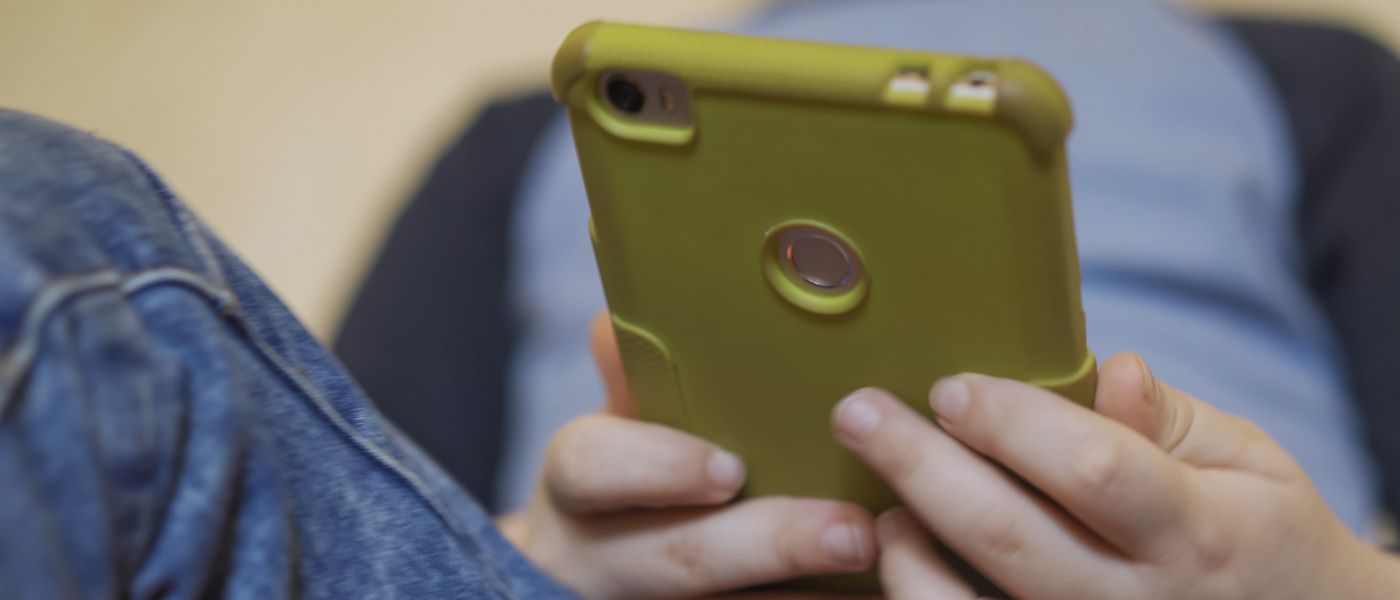

Nowadays, children usually have access to the digital world from a very early age. Tablets and cell phones are just as much a part of our world as the rest of our environment. They have become everyday objects that we take for granted. This offers numerous advantages and disadvantages in many areas.
For example, it seems easy to let children watch a movie or play a game on a tablet. But consuming digital goods is not always good for children.
- Children's cell phone use: Is it harmful to them?
- Should children's cell phones be monitored?
- How can cell phone addiction be combated?
- How can cell phone rules for 13-year-olds be enforced?
When does cell phone use become a problem for children?
Cell phones are part of our everyday lives. Every child and teenager has access to cell phones and uses them to make plans or participate in social life.
It is often not easy to determine where excessive cell phone use begins. There are a few signs you can look out for in your child.
Decline in school performance
Warning signs include, for example, a decline in school performance. In this case, it is important to talk to the child to find out the cause. Excessive cell phone use may or may not be the cause of the decline in school performance.
By observing, consulting with teachers, and talking to your child, you can find out whether their declining school performance has anything to do with their cell phone use.

Constantly checking your phone
Constantly checking your phone during a conversation or while eating is not only rude, it can also be a sign of (early) addiction.
If constantly checking your phone has become part of everyday life, even in situations where it is actually inappropriate, you should take a closer look at your child's cell phone use.
Social contacts begin to suffer
Actually, cell phones should only be a tool for social interaction and occasionally looking something up or playing a game.
If your child begins to reduce or avoid real-life social contact and instead takes refuge in the digital world, it's time to take action.
How can I get my child to put down their cell phone?
To get your child away from their cell phone, you need to offer them an alternative. Simply forbidding your child from using their cell phone without offering them anything else will lead to boredom.
In the worst case, the child will then associate "away from the cell phone" with a negative feeling. Therefore, "away from the cell phone" should also mean "towards something else."
Joint excursions
Joint outings are a way to bring your child back into the real world and spend time with the family. Make sure that these are outings that your child will enjoy!
A walk in the woods with their parents is usually not very exciting for teenagers. They would much rather go to an amusement park!
puzzling
Doing puzzles together can also distract from cell phones. While computer games do not involve any tactile sensations, puzzles are different. They train fine motor skills and mental fitness! They also promote your child's concentration. You can find a selection of puzzles for young and old here.
meet friends
Put down your phone and get out into the real world! Virtual "friends" in a computer game can't do what real friends can.
play board games
You are never too old or too young for board games. Playing games together not only helps build social skills, it's also just plain fun. Board games are also a great indoor activity for children.
Build a marble run
A wooden marble run is for small children? Not at all! With these kits, teenagers and adults can also have fun with marble runs.
Physical understanding is incorporated in a playful way, and it is also a fun indoor activity for children on rainy days!
Cooking together
Cooking together is one of the oldest activities that we humans traditionally use to strengthen our social cohesion.
Tips for combating cell phone addiction in children
There are various ways to combat cell phone addiction in children. The following measures can help to get children away from their cell phones:
Establish cell-free zones
Cell phone-free zones can counteract constant screen checking. At first, it will usually be difficult to enforce these cell phone-free zones, so consistency is required here.
It is important that you also adhere to this rule yourself, as children usually learn by imitation.
Give children more attention
Children need our attention. Sometimes excessive cell phone use is also a sign that our children are being left alone too much. Paradoxically, they often seem to want this and reject their parents because the cell phone seems more appealing.
Expert tip: In the end, parental attention is always more valuable than the screen.
Critically examine your own behavior
As described above, children learn by imitation. If we are constantly checking our cell phones,
- because the boss wants to know something else,
- your girlfriend needs advice
- or followed an interesting discussion on Facebook, should not be surprised if their child exhibits similar behavior.
Delete addictive apps
Some apps are known to be particularly addictive. If your child is constantly glued to the screen of a particular app, it may be a good idea to delete the app and configure the phone so that your child cannot download it again.

Conclusion
Cell phones are part of our world, but they shouldn't become a problem. If your child's cell phone is causing them to withdraw from social life or behave inappropriately toward others, caution is advised.