


A few days ago, we asked you what your bookshelf looks like. We were expecting a few nice photos. We received 27 responses, countless pictures, and one question that’s been on our minds ever since.
It came from Pauline, and it was so honest that it made us swallow hard for a moment:
I love your wooden puzzles, but I really don't like having things lying around gathering dust that serve no other purpose. With a lot of things, I think to myself: "That looks cool, it'd definitely be fun... but what am I supposed to do with it?"
This isn't just nitpicking. It's perhaps the most important question you can ask yourself before buying a wooden model kit. And because we didn't want to answer it in a single sentence, we decided instead to find out what our customers actually do with their finished models.
Answer 1: They are located where the work is being done
Emre sent us photos of his desk. Not a display case or a museum, but the desk where he actually sits, with a cutting mat, tools, and two finished models on the edge. He writes:
I use the desk for all kinds of tasks, like building models, thoroughly cleaning controllers, and so on. The models are a little distraction that always makes me smile.

A smile, just in passing, several times a day. That's not just for show. That's a very good reason.
Answer 2: They are simply in use
Kalle wasn't able to send us a group photo at all, and his explanation is our favorite line from the whole campaign:
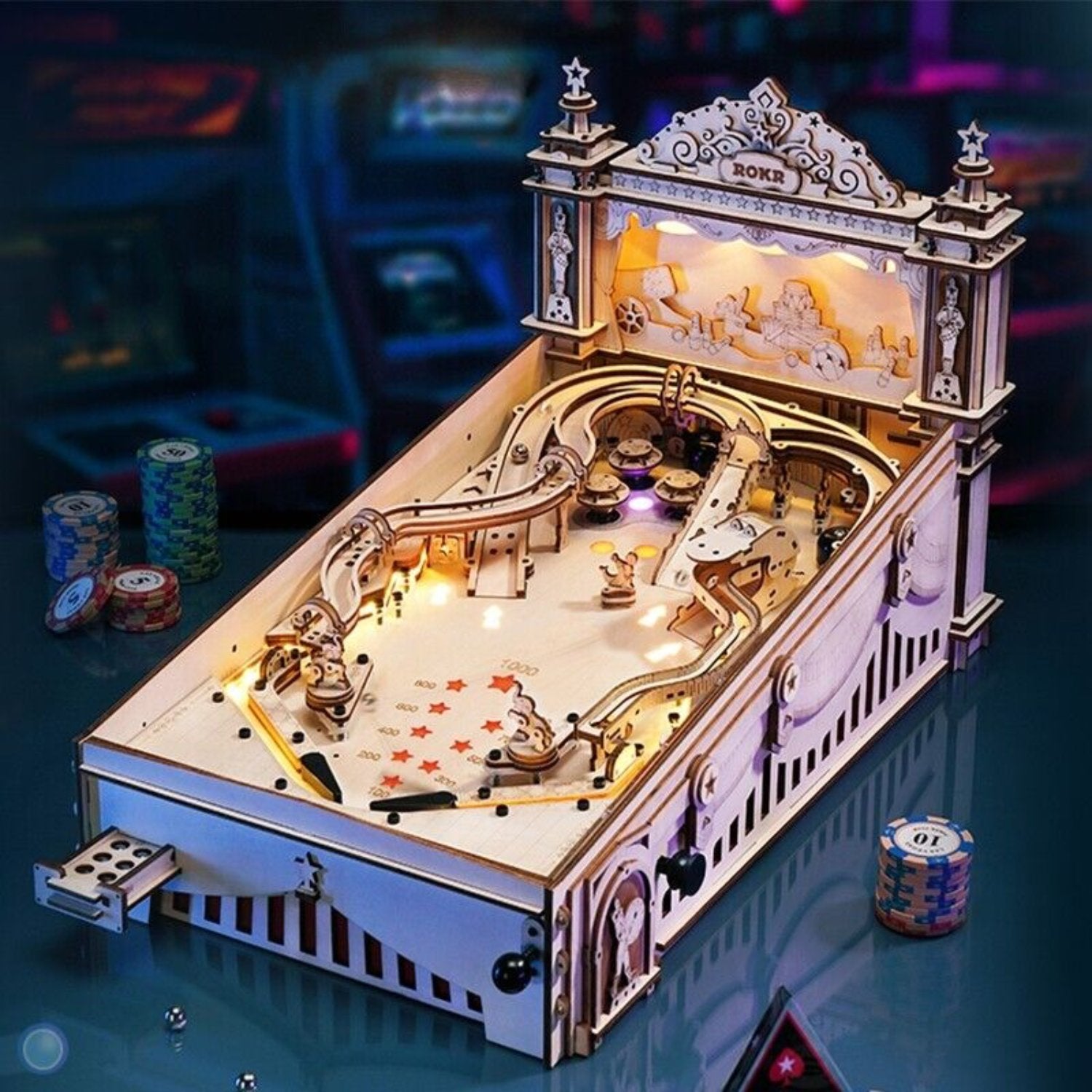
Unfortunately, it's not possible to take a picture of the collection as it is, since both the clock and the 3D pinball machine are in daily use in different households.
Two models, two households, everyday use. A clock tells the time. Someone is playing pinball. Some kits answer Pauline’s question simply by working.
Answer 3: They move to where there is space
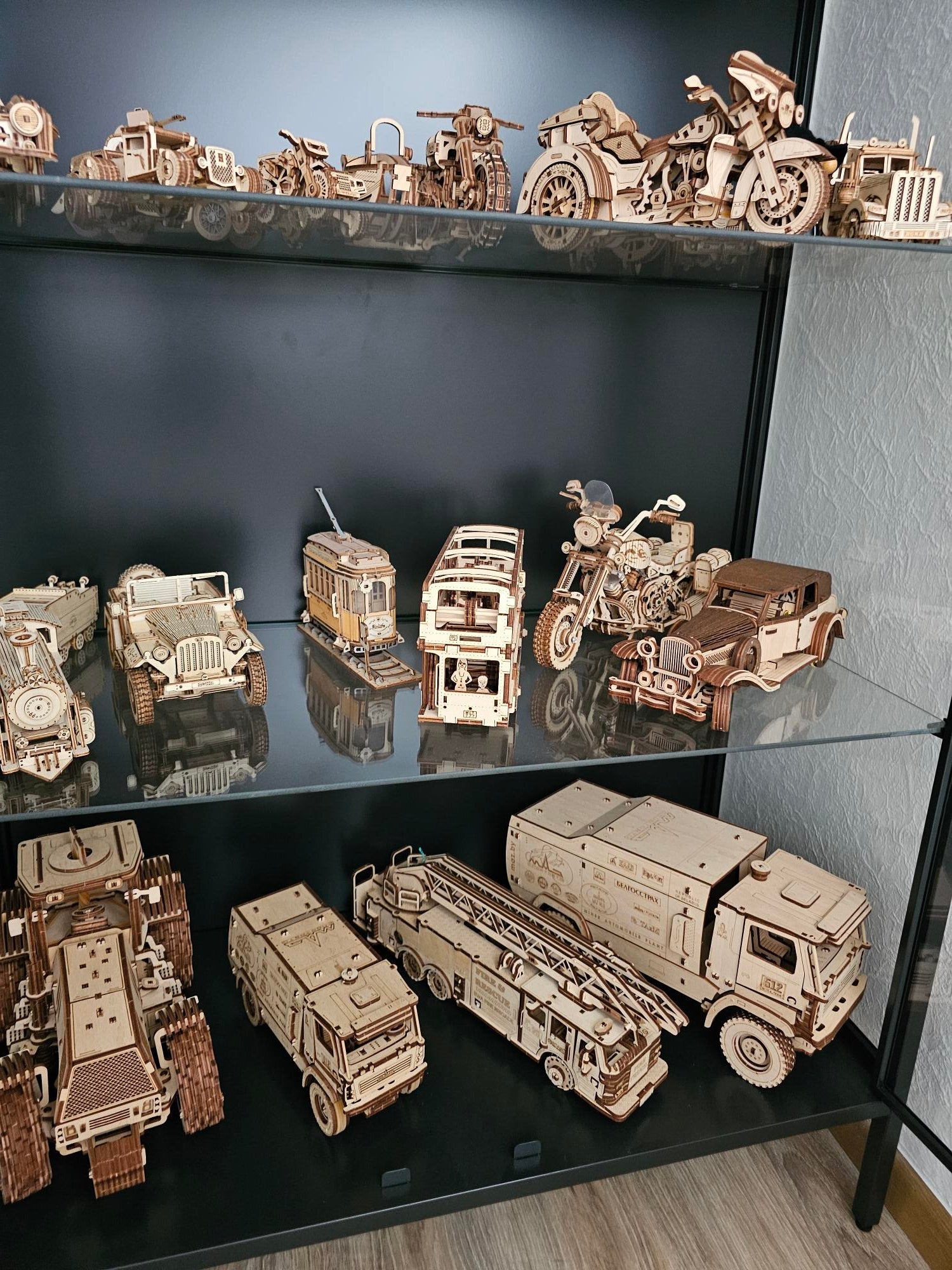
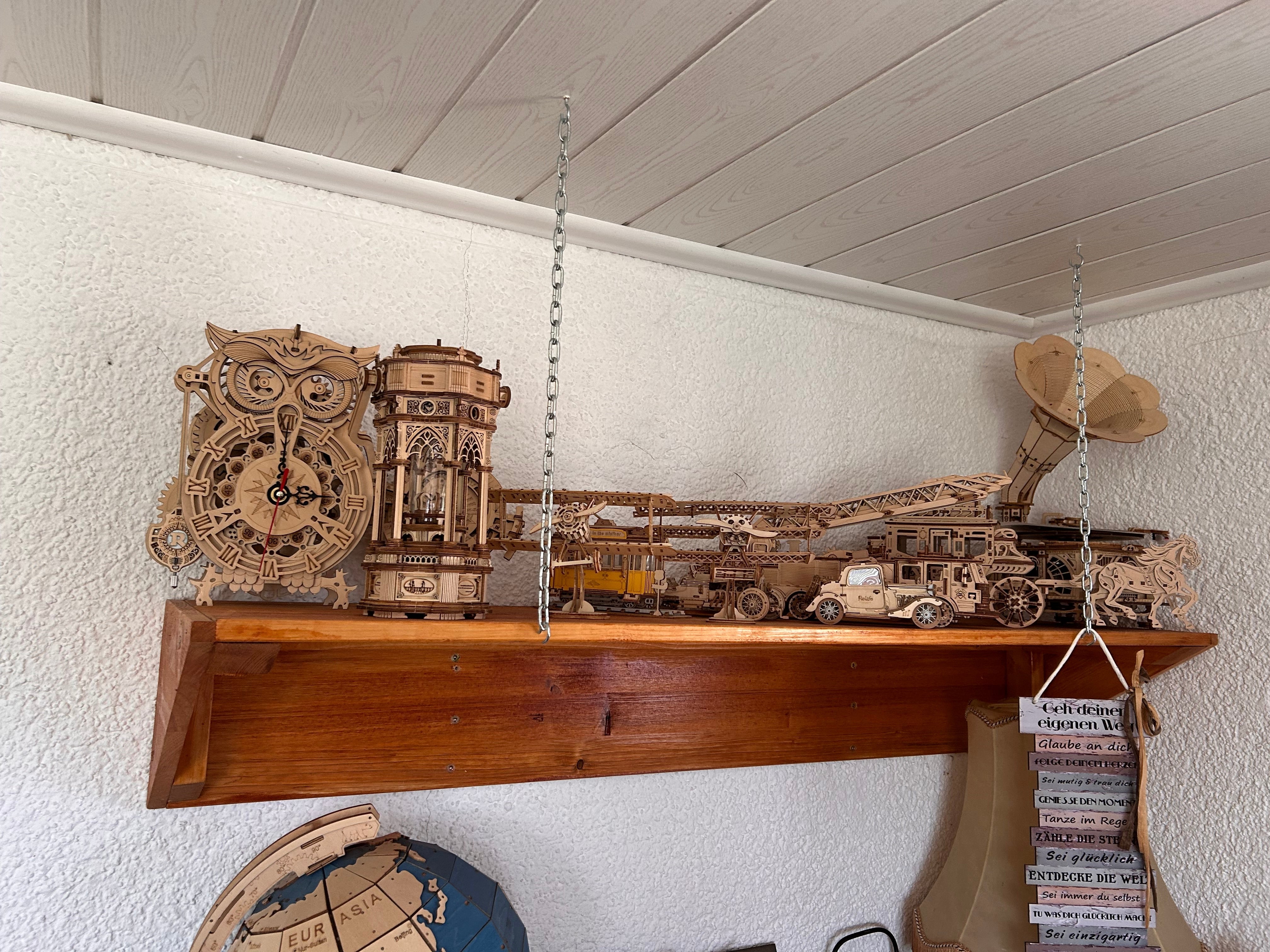
Peggy doesn't keep her collection in the living room, but in the garden shed. She herself refers to it—in quotation marks—as her "little" collection. Anyone who sees the photo at the top will immediately understand the quotation marks: an owl clock, a crane, and vehicles, all on a single wall shelf.
And Andrea has a problem that many people are probably familiar with:
Not all of you, but many of you. My big marble run doesn't fit on the shelf.
To be honest, this is something we take seriously: It's hard to gauge the size of a product before buying it. That's exactly why we include the dimensions, number of parts, and assembly time in our product details, and we're working on making this information available even earlier.
Answer 4: They tell a story that already existed
Marina showed us her wall. On the left and right were two display cases full of souvenirs from every country she’s visited. And right in the middle, as the focal point:
I have two shelves with souvenirs from all the countries and cities I've visited. And in the middle is a world map made from a jigsaw puzzle.

The world map isn't just sitting there as decoration. It organizes everything else. Every country marked on it represents a trip she remembers.
The honest answer to Pauline's question
It goes like this: It depends, and you should be honest with yourself before making a purchase.
If, like Pauline, you need every centimeter of shelf space for books, a large diorama might not be the right model for you. In that case, you’ll probably prefer kits that serve a practical purpose: a clock, a lamp, a Riddle Box to store odds and ends later on, or a pinball machine you can actually play.
By the way, Pauline sent us a suggestion right away, and it's so good that we're including it here in its entirety:
I'd love it if you could make even more everyday items, like things for the desk. Cool organizers shaped like, say, a small town or a castle, or with flowers, or rectangular puzzles that you can put together to form boxes.
We don't have this email in our archive. It's in our collection of ideas for future in-house developments. And Pauline isn't the only one with this request: In our post-purchase survey, customers regularly mention exactly that—for example, "offer even more useful or larger items to build" and "more kits that let you experience the functions."
A model that answers exactly this question
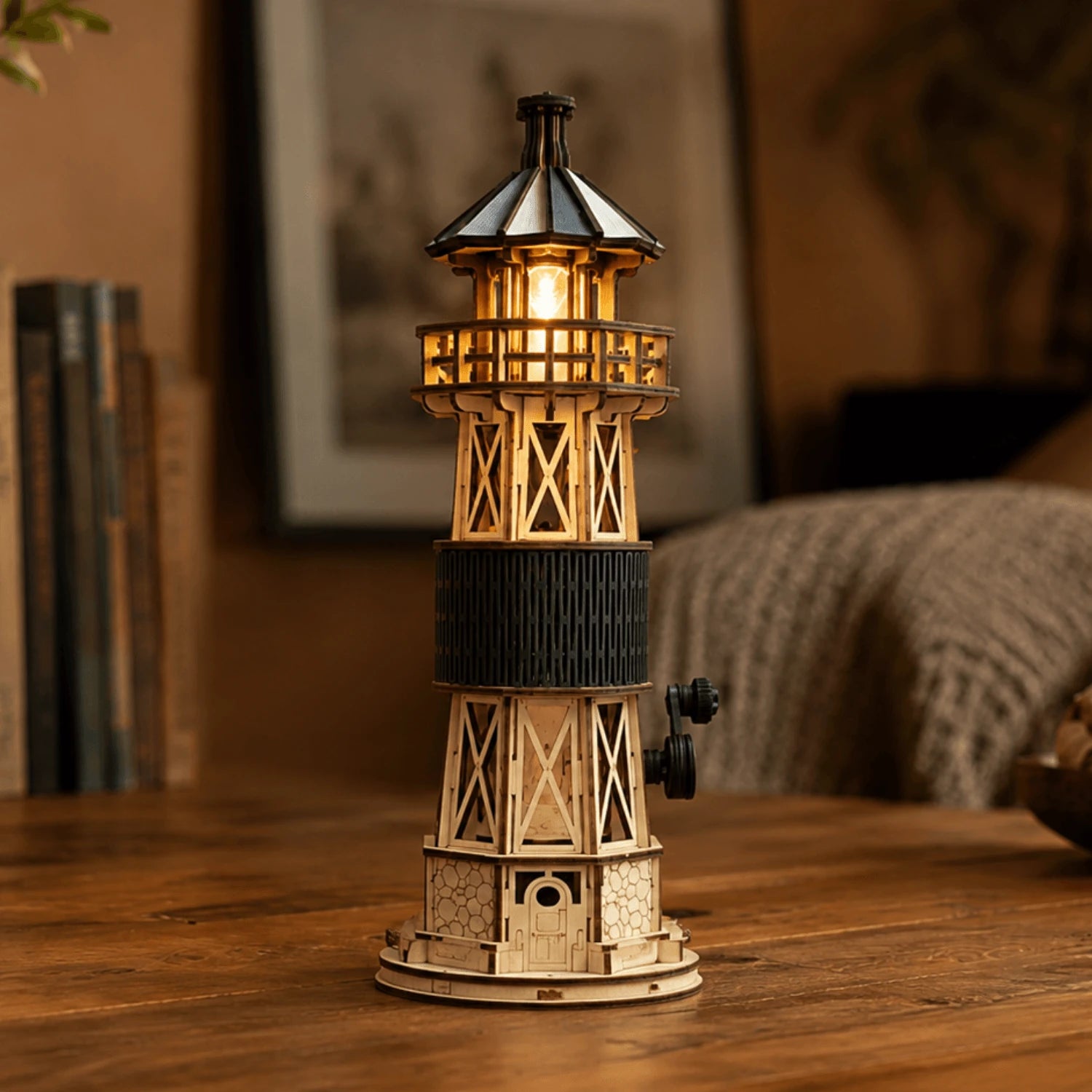
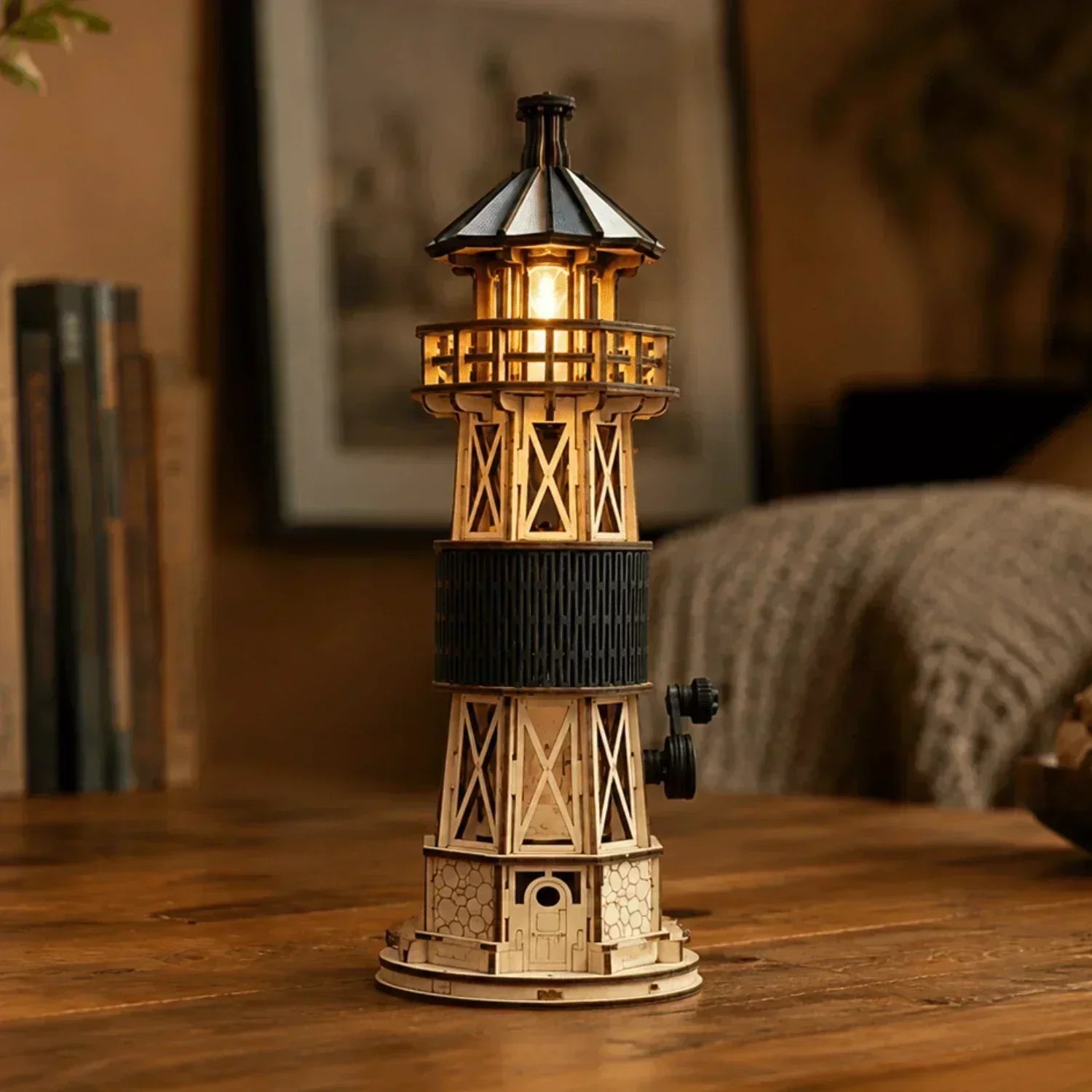
That’s one of the reasons our Luminous Lighthouse turned out the way it did. It’s powered by a hand crank, has three brightness settings, and doesn’t just sit around afterward: For many people, it becomes a nightlight in the kids’ room or a mood lamp on a shelf.
Thank you to Pauline, Emre, Kalle, Peggy, Andrea, and Marina for letting us take a look inside your living rooms, garden sheds, and at your desks.
The next installment in this series is about an 86-year-old man who spent four weeks building a single model, and explores the question of whether you're ever too old to do that.
Your MagicHolz